零点击广告:效率至上如何把用户变成雇佣兵载体
广告平台在追求效率的同时,忽视了安全风险,导致零点击广告成为潜在的安全威胁。
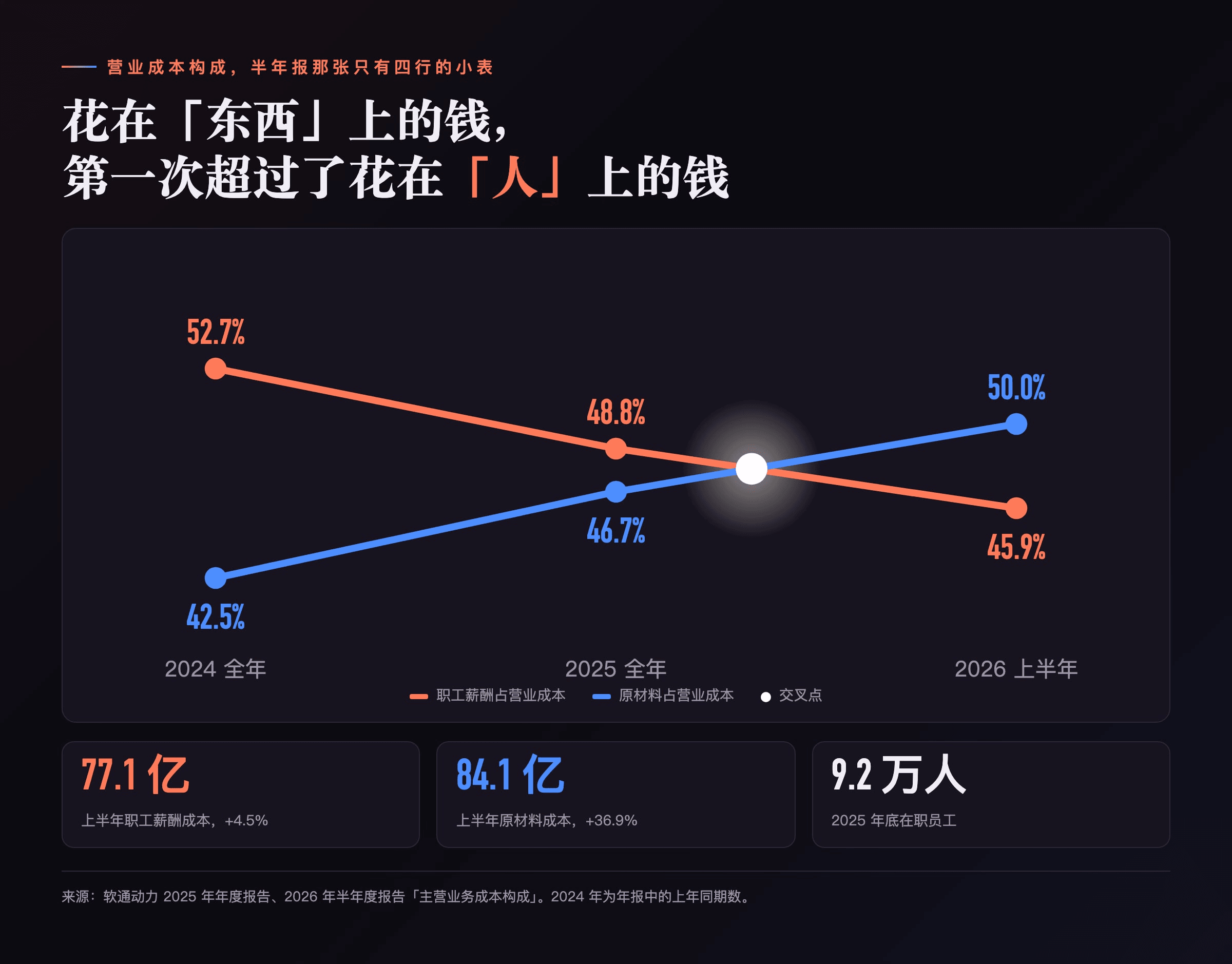
软件外包公司软通动力,成本里原材料第一次超过了人工
软通动力今年上半年的营业成本里,原材料占 50.0%,职工薪酬 45.9%,花在东西上的钱第一次超过了花在人上的钱。这家靠程序员起家、曾经一半收入来自华为的外包公司,2024 年买下同方计算机和机械革命开始卖电脑,现在又在建工厂造 AI 服务器。营收从 130 亿翻到 351 亿,净利润却从 12.55 亿掉到 2.06 亿;上半年存货多了 30 亿、短期借款多了 34 亿,研发投入却少了 14.5%。一家卖人的公司变成卖货的公司,代价先写在资产负债表上。
亚马逊如何通过数据垄断推高网络价格
亚马逊通过数据垄断和算法操纵,推高了网络价格,损害了消费者和卖家利益。
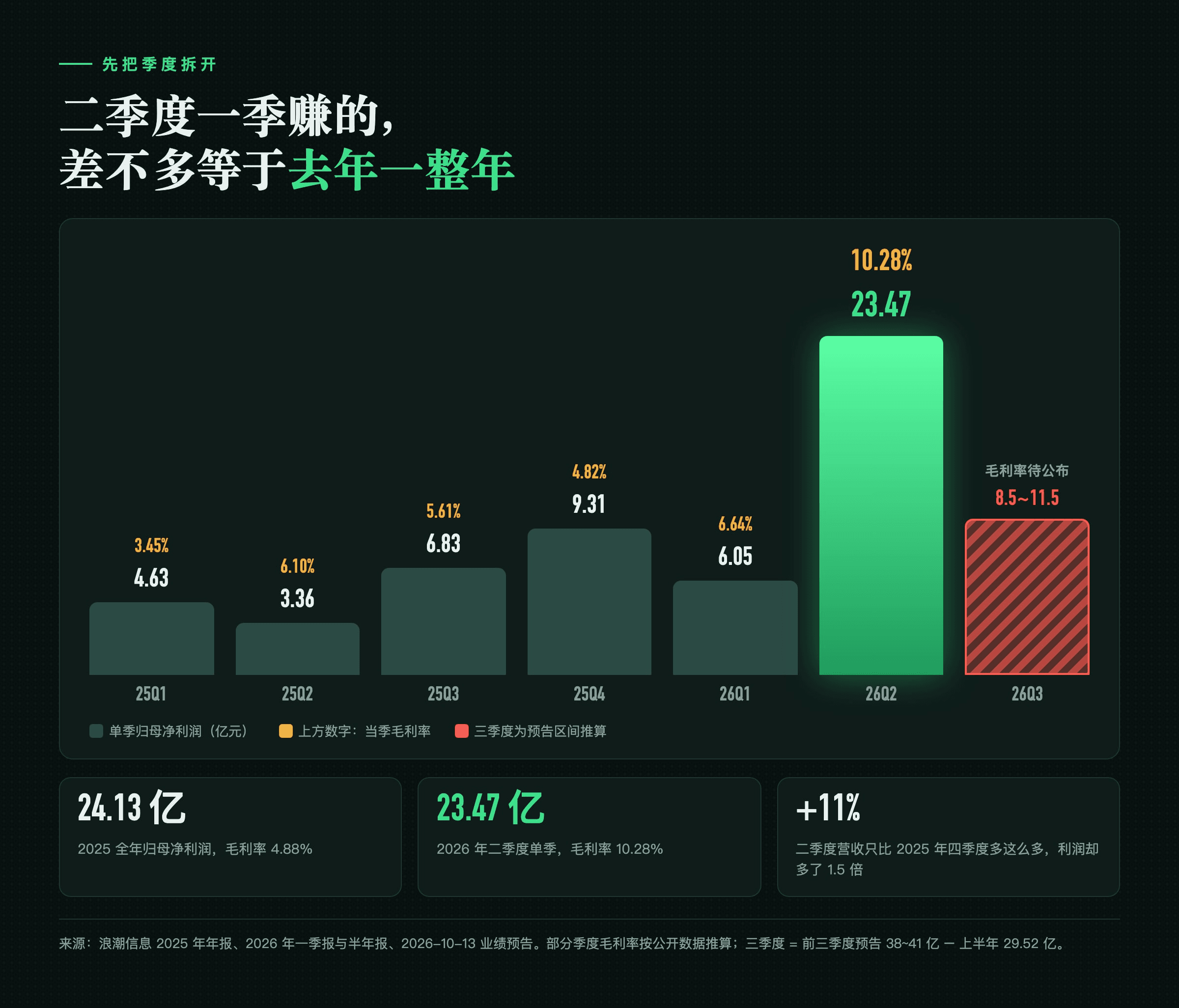
浪潮前三季度利润翻倍,第三季度却比上一季少赚一半多
浪潮信息前三季度净利润预增 156% 到 177%,算下来三季度单季比二季度少赚 51% 到 64%。二季度一季赚了 23.47 亿,差不多等于去年一整年,毛利率冲到 10.28%。利润跟着内存价格走:涨价最猛时毛利率最高,涨价放缓就回落。同一波涨价,英伟达毛利率被压,浪潮被抬。半年报里,浪潮借了 112 亿短债,多囤了 193 亿原材料,这是一次押零件价格的押注。文末给出三季报可以检验的三个数。
Apple HomeView:重塑家庭智能中心的未来
Apple HomeView通过本地计算和隐私保护,重塑了家庭智能中心的未来。
iFlytek's half-year revenue of 11.6 billion yuan is still losing money: it is using education money to support a big model
iFlytek's revenue in the first half of the year was 11.6 billion yuan, with a parent loss of 204 million yuan and a non-deduction loss of 637 million yuan. Losses in the first half of the year are an old rule. What is worth watching is the structure of the accounts: for every 100 yuan of income, R & D spent 21.8 yuan, more than sales; for the first time, the income from open platforms exceeded that of education, but the gross profit was only 40% of that of education. Compared with Intelligent Spectrum and MiniMax, the industry-wide gross profit of selling models is around 20%. iFlytek's ability to make profits throughout the year relies on educating these old businesses. The problem is that the old business is slowing down. The computing power bill in R & D has doubled every year. The fixed increase of 4 billion yuan has 60% of the investment power, and there is still 21.7 billion yuan receivable on the account. At the end of the article, three numbers that can be tested in the three quarterly reports are given.
The micro server hidden behind Codex
Turn user machines into low-cost cloud nodes to collect hidden service fees
AI companies are starting to build their own mobile phones, and their 24-hour computing power accounts will be transferred to you.
Qualcomm CEO Ammon revealed that some AI companies require mobile phones to be able to permanently run hundreds of billions of parameter models in 2028, and other AI companies have begun to make their own mobile phones. Even if the 100 billion parameter is pressed to 4 bits, it requires 50GB of memory. Nowadays, the mainstream for high-end machines is 12GB. Why do you have to put it on your mobile phone and keep running? One account: The agent resident in the cloud burns the computing power of the AI company every minute, and when placed on the mobile phone, it becomes a one-time payment when you buy the phone. One ticket: Agents must have system permissions to operate applications. Doubao mobile phones have demonstrated it last year, and system permissions are only the first door. Coupled with the increase in memory prices, who will the money be ultimately blamed?
Qwen-Image-2.1-Uncensored-GGUF: A new paradigm for AI image generation
Explore the innovations and challenges of AI image generation technology in privacy protection
REA Reverse: The Art of Reverse Engineering
Apply reverse engineering to product innovation and explore ways to learn from competitors or successful products
OpenAI's dots can work for you 24 hours a day, and what it is thinking is getting harder and harder to see
OpenAI launched dots on September 29: It has its own cloud computer, memory and more than 4000 connectable applications. It is still working when you close the window. Take apart the publication, security blog, help document and GPT-6 Astra system card and see: OpenAI spends most of its efforts on how to control it. The four-level permissions, independent model review actions, working environment and management system are separated; the charging method is shifting from selling subscriptions to selling labor based on the number of dots, speed and workload. At the same time, the system card acknowledges that the model will write down its thoughts short after knowing that it is being monitored, making it increasingly difficult to see what it is thinking. Three judgment and test methods are given at the end of the paper.
Cloudflare's Deno acquisition: reshaping the paradigm for developer tools
Explore how Deno changed the use of developer tools and business operating models through Cloudflare's acquisition
Meitu's AI business, the largest cost goes to the app store
In the first half of the year, Meitu's revenue increased by 22% and net profit increased by 40%. Everyone said that AI made it make money, and insiders were worried that computing power would eat up profits. Taking apart the original semi-annual report, the largest cost is the share paid to payment channels such as Apple and Google: 375.6 million yuan, accounting for 59.5% of the cost of sales and 2.8 times the cost of computing power and cloud. Counter-intuitively, the computing power consumed by users has increased by about 113%, while the cost of computing power and cloud has only increased by 25%, because 96% of the output comes from its deliberately narrow self-developed model. The largest toll is charged when users click to purchase, and the growth rate of overseas paying users is about twice that of mainland China. The more successful the voyage, the heavier the share. Another change is that the ceiling of subscriptions has been opened: the average paying user is about 200 yuan a year, and the number for some high-spending users is more than 10 times. The judgment is given at the end of the text and which three numbers will be reflected if the judgment is wrong.
JEV-27B-VL: The future paradigm for AI models
Analyze how JEV-27B-VL reshapes the AI decision-making process
AI is starting to borrow money: tech giants will issue bonds this year as fast as twice as much as last year
Three things came together this week: banks began distributing a $60 billion financing for Anthropic to buy chips, SpaceX was raising $40 billion to buy Nvidia chips, of which 30 billion were investment-grade bonds, and Bloomberg reported that technology giants were turning to borrowing to raise money for AI. Amazon, Alphabet, Meta, and Oracle issued bonds, which will be approximately US$17 billion in 2024, approximately US$108 billion in 2025, and approximately US$194 billion by July this year. The reason is that spending is faster than earning: since the second quarter, total capital expenditures exceed operating cash flow, and Bank of America predicts that the free cash flow of these companies will change from about positive 180 billion yuan in 2025 to about negative 64 billion yuan this year. There are three accounts here: the nature of money has changed, and interest rates have begun to be linked to AI; debts borrowed for a maximum of 30 years or even 100 years, and cards purchased for two years; risks have been pushed from model companies to suppliers, and then to banks and bond investors. The market is already repricing: the subscription multiple has dropped from 5 times to less than 2 times, and the spread is widening.
Claude Haiku 5.5: The Intelligent Revolution of AI Poetry
Explore how AI leads the intelligent trend of poetry creation through Claude Haiku 5.5
The future of AI prescription rights: technical decision-making and business accounts
Explore AI's decision-making power in the medical field, and the business considerations and ethical issues behind it
Web Search API: Reshaping the paradigm of information acquisition
Explore how the Web Search API reshapes the paradigm of information acquisition by influencing user behavior and search algorithms
Platform Usage Paradox: Why Don't Developers Use Platforms?
Analyze the psychological motivations and mechanisms of developers not to use the platform, and compare them with China's Internet platform strategies
Laya: Uncovering the future trends of the AI entertainment industry
Explore how laya reshaped the entertainment industry and the technical decisions and business considerations behind it
Qwen-Image-2.1-Uncensored-GGUF: A new dimension in AI image generation
Explore the application and influence of AI image generation technology in artistic creation
Default changes in Git SHA-256: A reflection on a technical decision
Exploring the commercial accounts and costs of efficiency behind technical decision-making
Gemini 4 Argon: AI writing transcends code. Is it a "tool" or a "creator"?
Gemini 4 Argon's breakthrough in writing marks the evolution of AI tools from assisted creation to independent content generation, exploring how AI reshapes human creativity and content production models.
AI image generation: a new dimension beyond the visual revolution
Explore the potential impact of AI image generation technology in art and culture, and its challenges to the definition of traditional visual arts